
How Does U.S. National Power Need To Adjust To Keep Up With Our Competitors?

by Brenden Kazensky, 2024-2025 PCFR Fellow
What defines a country’s national power is the summation of characteristics and resources at its disposal to maintain power. The United States is currently in the middle of watching these national power characteristics being stretched at all ends due to challenges posed by a multitude of other countries. Examples of this are having a militaristic foot in Ukraine and Israel, economic output being threatened by growing actors such as China, and the critique of American processes by the Middle East. All of this is occurring while trying to maintain the objectives of the United States’ national interests. The U.S. needs to take time to reflect and assess these challenges posed and make changes to avoid stretching too thin or strengthening weaker areas.
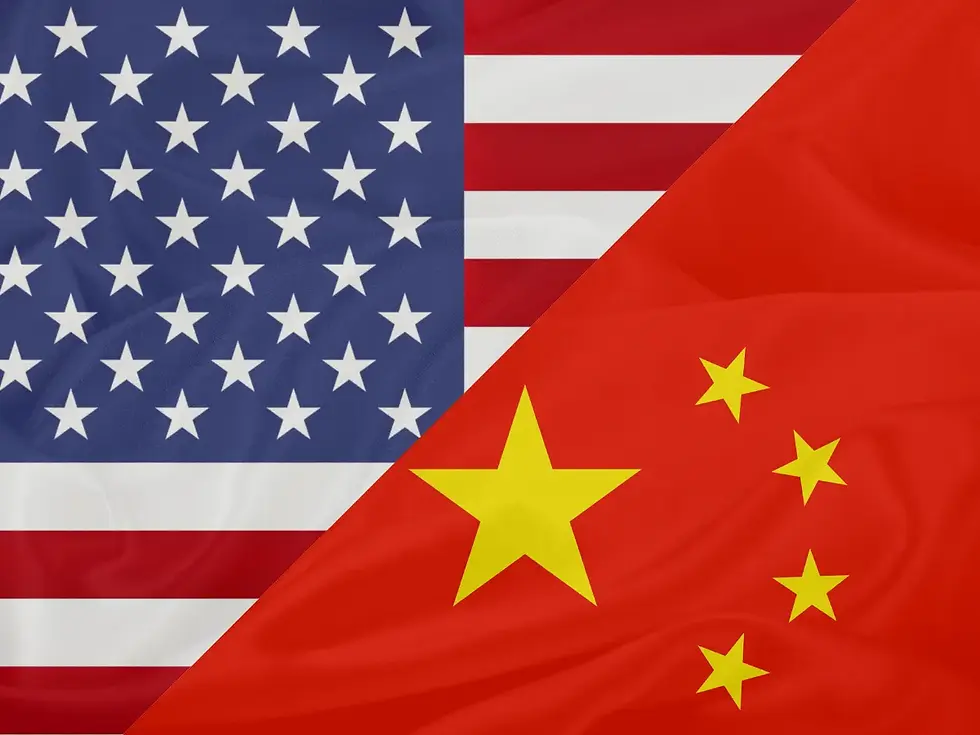
Through competition with China, Russia, and Iran, the United State’s leadership is constantly being challenged in a variety of ways. This can be seen in the strain on our defense industry, ability to access resources abroad, constant critical analysis of our own diplomatic processes, and societal functioning. What steps can the United States take to address these cracks in our national power and maintain our leadership in the global arena?
The United States is well known for its ability to have a hand in all places at once around the world. It is the leading country for involvement in international affairs and the most influential country for this very reason. Nonetheless, powers such as China and Russia are beginning to put a strain on U.S. influence by challenging the pieces that make up national power and protect interests.
When considering military and defense output, the United States has heavily invested in the wars of Ukraine and Israel. Both of these wars are receiving billions of dollars in weapons and aid from the U.S., stressing the ability of the American defense industry to keep up with the demand. Prior to these events occurring, the United States needed to take steps to ensure that the military was well-equipped to handle a war with a major power such as China in Taiwan while continuing to build alliances that extend influence. Trying to maintain this level of output is necessary, but substantially taxing on the ability of defense contractors to keep up.1 Without being able to outsource workload, this could be an uphill battle for the United States to overcome in the case of a significant event were to occur specifically against the U.S.
The United States must also consider how it appears from the outside, in. The social institutions that build the fabric of the U.S. are always under constant scrutiny, but once again, as other nations gain power, their influence in articulating the errors the United States makes is growing as well. What others see of the United States is a sometimes hypocritical democratic system that, although preached for perfection, has many flaws. Social unrest, claims of democratic failures, and corruption, among many other things, contribute to this image and are weaponized by competitors to lower the national power of the United States.
These are just a few examples of how the United States’ national power is defined and challenged. An internal assessment of all the pieces of this power is going to be imperative in order to find where the U.S. must make changes to address the growing diplomatic prowess and power of competitors. The United States remaining a great power is in its national interest, and this can only be done by re-evaluating the weaknesses in its national power.
Source
1 https://www.cnbc.com/2022/10/15/us-defense-industry-faces-surging-demand-and-a-supply-chain-crunch.html
The views expressed are solely those of the writer and not those of PCFR, which takes no institutional position on policy.


