
Reversed Expectations: Shifting U.S. Perceptions of China

by Dr. Lily McElwee, PCFR President & CEO
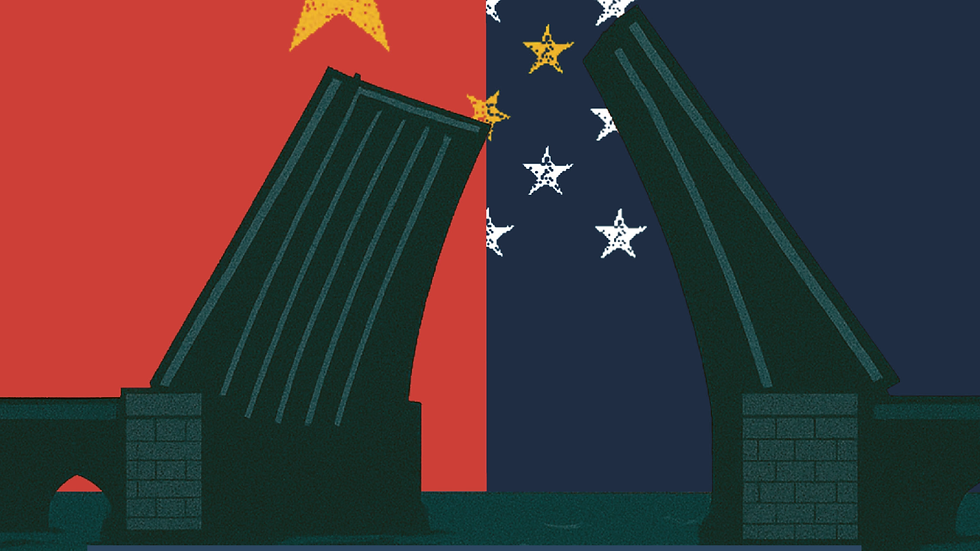
It was a hot Saturday afternoon in Hangzhou. Air Force One was coming in for landing at Xiaoshan International Airport, but it remained far from clear how President Obama would get off the plane. Per common practice on the president’s foreign trips, the U.S. military had flown in a standard set of rolling air stairs. Beijing had initially approved their use, but just before Obama’s arrival, reversed its stance: the president would have to use a Chinese staircase. “Fine,” the rattled White House team agreed, so long as the driver transporting the Chinese stairs to Air Force One could communicate in English. Beijing denied the request. Then, in another quick reversal, Chinese authorities consented as Obama’s plane was preparing to land. By that point, the White House team judged, it was too late to bring in any stairs at all.
The President did deplane that day, but he was easy to miss making his way through an exit in the aircraft’s belly usually reserved for use in combat zones. The press had a field day. “Barack Obama forced to exit from ‘ass’ of Air Force One,” Reuters quipped. “Staircase snub,” wrote the South China Morning Post. The New York Times called it a “bumpy landing” for Obama in China. But much of the foreign press corps was prevented from seeing the show. As reporters walked under the wing to record the president’s arrival, they – alongside senior officials who had traveled with the president to Hangzhou – were met by a blue rope clasped tight by security guards. “This is our country!,” a Chinese security official shouted as White House staff protested the departure from protocol. Annoyed and confused, U.S. National Security Advisor Susan Rice ducked under the rope to get closer to the president, joined by her deputy Ben Rhodes. Rice and Rhodes were stopped once again, held back by the shouting Chinese official.
The following day, Obama was asked about the bumpy arrival. While tension with the Chinese over security and media access had been a constant of his trips over the years, he admitted, “the seams are showing a little more than usual.”
Obama’s words applied as much to the broader bilateral relationship as turbulence on the tarmac. It was 2016. Beijing was taking bold risks in pursuit of regional territorial claims, supporting more sophisticated cyber raids on U.S. military contractors, Silicon Valley firms, and other commercial targets, ramping up media censorship and control, cracking down on human rights activists and civil society organizations, and fleshing out a security apparatus to steel itself for a more contentious international environment. This was not the China that U.S. policymakers had expected to see after decades of commercial, diplomatic, and cultural engagement.
“They did things that weren’t anticipated,” Rice reflected on the events in Hangzhou. Back home, many in Washington were beginning to feel this applied to more of Beijing’s behavior than the staircase sequence. A seismic reversal in decades-long expectations of China’s rise was underway.
----


