Germany's Economic Rewiring and What It Means for Arizona

by Dr. Lily McElwee, PCFR President & CEO

The summer months at PCFR are a time for internal operations and planning for the season of programming ahead. They are also some of the rare periods when our staff has the capacity for personal travel, and this month, family commitments took me to two very different parts of Germany: Berlin, the nation’s political capital, and Hagen, a midsized industrial city in the West. In both cities, I sensed a country in the middle of a genuine economic reckoning, one that is forcing hard conversations about how Germany competes in the next decade.
Germany remains Europe’s largest economy and one of the world’s great manufacturing powers. But conversations across both cities reflected a widely shared sense that the country’s long-standing economic model (built on cheap energy and export-led manufacturing) is being rewired in real time. Business insolvencies are well above historical norms, at 24,000 over the past year, with ripple effects across the SME sector. The automotive industry, which directly and indirectly supports millions of jobs across Germany and Europe, is navigating intensifying competition from Chinese manufacturers, particularly in electric vehicles, even as German automakers work to reposition themselves in a Chinese market that looks very different than it did a decade ago.
Energy costs came up constantly. This went beyond my in-laws grumbling about prices at the pump ($8.30 per gallon for regular gasoline and $8.00 per gallon for diesel). I heard plenty of debate among millennials about the policy choices that got Germany here — the Merkel government’s decision to accelerate the nuclear phase-out after Fukushima, the past overreliance on Russian gas, and the more recent shocks from geopolitical conflict. There was also real engagement with what comes next: investment in renewables, grid modernization, and new supply diversification. Germany’s “Mittelstand” (small and medium-sized) firms are candid that elevated energy and input costs are reshaping investment decisions.
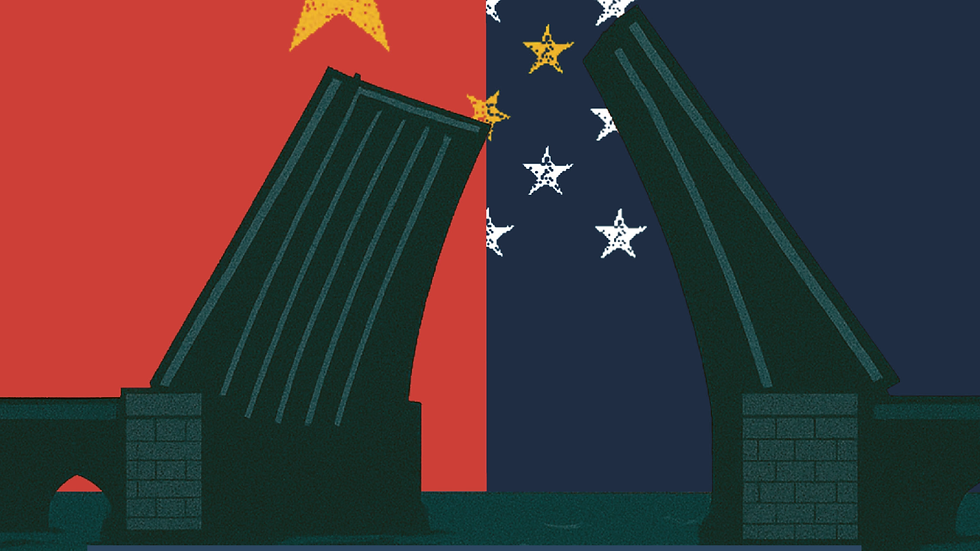
Perhaps most striking was how frequently China came up in my conversations, and how differently it’s discussed than even a few years ago. Where German firms once saw China primarily as a lucrative export market, many now describe it as a formidable competitor and a catalyst for change at home. German manufacturers are adjusting to weaker demand in China alongside Chinese firms that have become highly competitive in sectors Germany once led, from automobiles to advanced industrial machinery — a shift driven in large part by Beijing’s deliberate, large-scale industrial subsidies since the mid-2010s. (In fact, Beijing’s Made in China 2025 policy drew explicit inspiration from Germany’s Industrie 4.0 blueprint for continued manufacturing dominance).
German exports to China are at their lowest level in a decade. Germany now imports more advanced goods from China than it exports to China. German politicians now talk openly of a “China shock.” Chancellor Friedrich Merz has responded by accusing Beijing of artificially depressing the yuan and by taking a firmer line on Chinese industrial overcapacity and state subsidies, echoing EU-level efforts to push back against heavily subsidized Chinese exports.
I came away from these conversations more convinced than ever that Germany’s period of adjustment is precisely what makes it such an important partner for Arizona right now.
German companies continue to be among the largest foreign investors in our state, supporting thousands of Arizona jobs across advanced manufacturing, aerospace, automotive, and renewable energy. As Germany works to diversify supply chains, deepen transatlantic partnerships where possible, and rebuild its competitive edge, Arizona’s strengths — semiconductors and advanced manufacturing, clean energy, logistics, and research universities — position our state as a natural partner in that rewiring.
The relationship is not one-directional, either: as Arizona races to build the skilled workforce that semiconductor and advanced manufacturing growth demands, Germany’s vocational training system — the backbone of its Mittelstand and a model few countries have matched — offers a playbook worth studying closely. It will be interesting to watch how this rewiring plays out over the next few years, and Arizona should stay alert to the opportunities it opens up along the way.